
Most conversations about psychosocial risks start with the employee, and rightly so. Stress, burnout, harassment, a strained relationship with a manager, or a team where nobody feels able to speak up can do real damage to someone’s health.
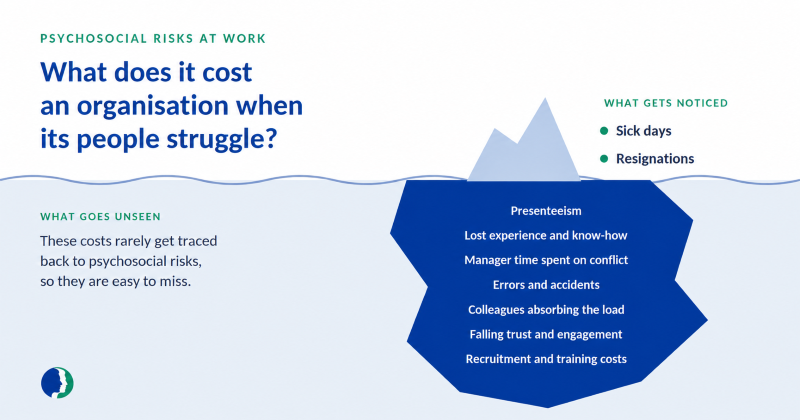
But organisations pay too, and the bill usually arrives under a different name.
It shows up as sick days. As a strong performer who gradually stops performing. As a resignation that takes years of know-how out the door and starts a recruitment process. As a manager who spends half the week dealing with a conflict, and colleagues quietly covering for someone who is struggling. Errors and accidents become more likely, and engagement and trust wear down. Presenteeism is the hardest to spot: people are at their desks, but not working at their usual level.
Because these costs rarely get traced back to psychosocial risks, they are easy to miss.
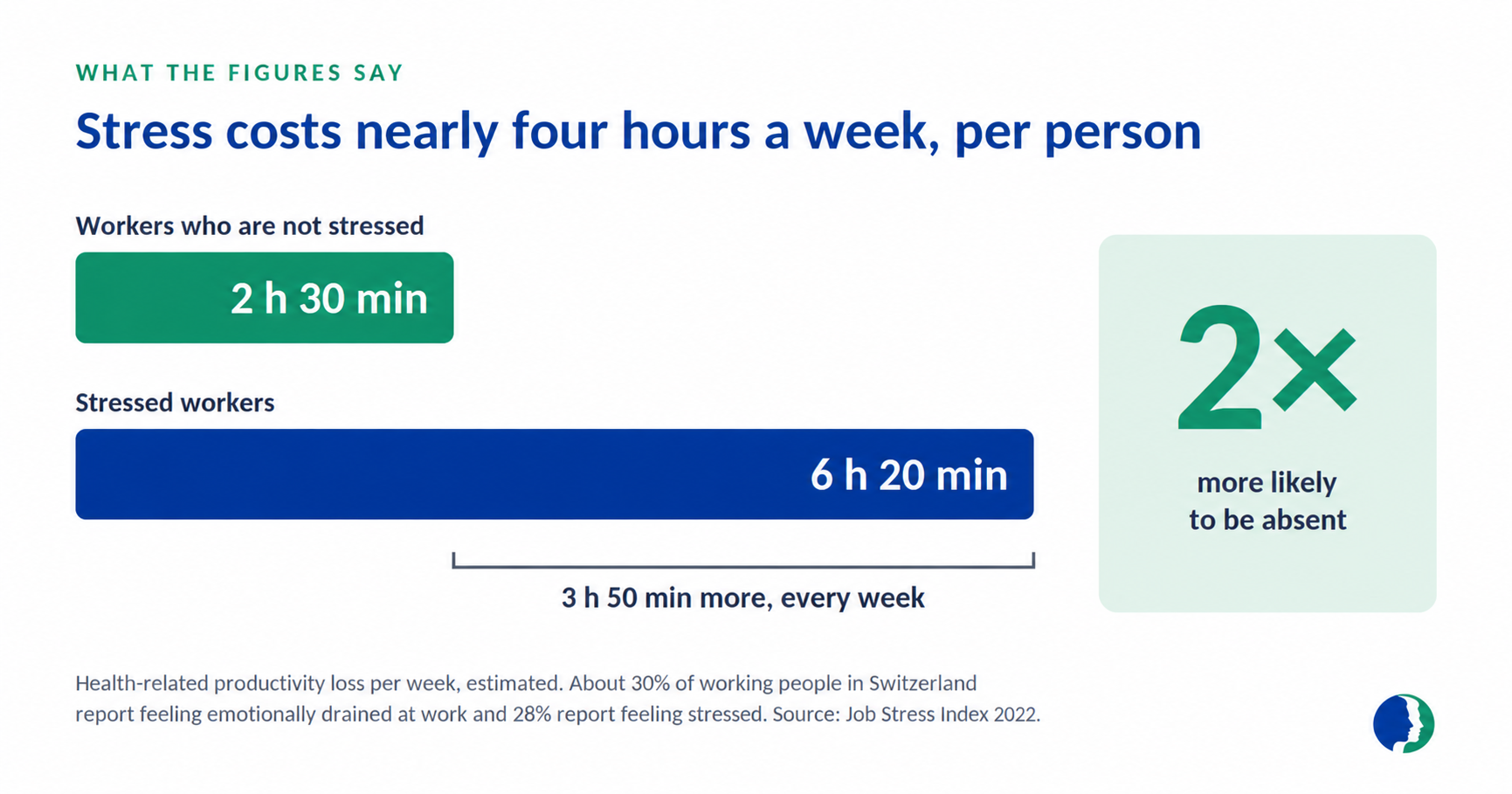
The numbers are hard to ignore. The 2022 Job Stress Index estimates that work-related stress costs Swiss companies CHF 6.5 billion a year, through absence, lost productivity, turnover and presenteeism. About 30% of working people in Switzerland say they feel emotionally drained at work, and 28% say they feel stressed. Stressed workers are estimated to be twice as likely to be absent. They also lose around 6 hours 20 minutes a week to health-related productivity loss, compared with about 2 hours 30 minutes for colleagues who aren’t stressed. That is nearly four extra hours, per person, every week.
Not every absence or resignation comes down to psychosocial risks, of course. But even allowing for that, the cost is clearly not only a human one. It is organisational and financial too.